INTRODUCTION
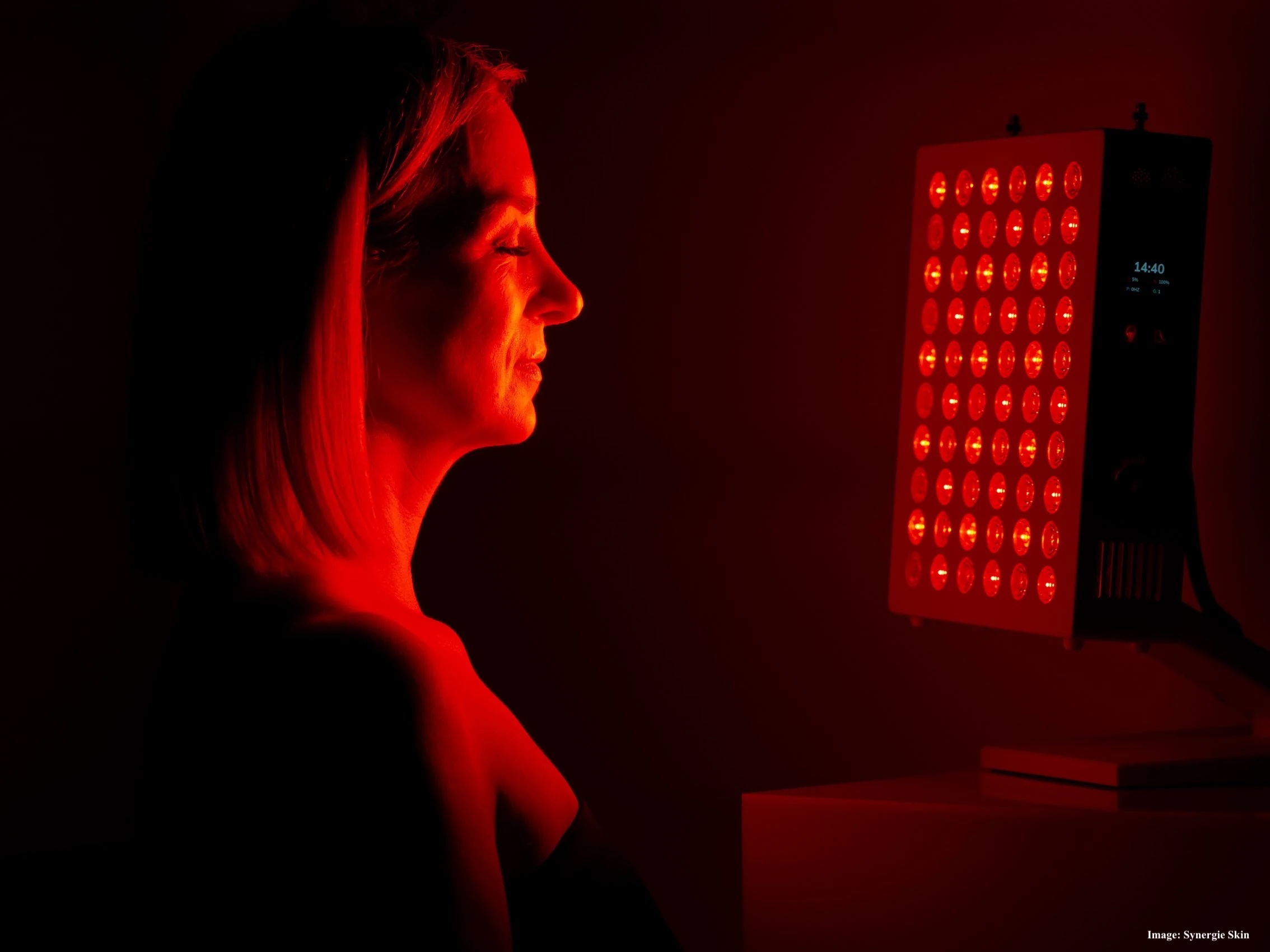
So, there is a craze happening with this red light therapy (RLT) thing…technically called photobiomodulation, or PBM.1 Big panels are popping up in gyms, health care professionals are offering it, and people are buying them for personal use. You hear things like “it’s good for you.” But what is PBM anyhow, how is it good, why is it good, and when should we use it?
WHAT IS LIGHT/RED LIGHT ANYHOW?
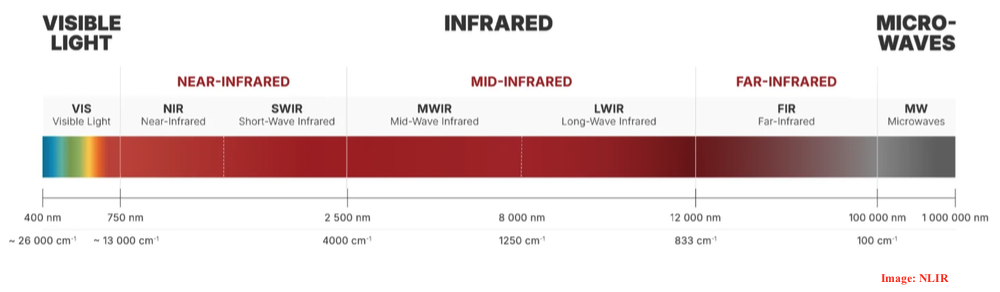
Well, all light is characterized and distinguished by wavelengths, and their units are in nanometres (nm). Some of those wavelengths can be seen by your eyes in about the range of up to 750 nm (see the image above), while higher wavelengths cannot be registered by your eyes (except if you are Geordi La Forge…if you know, you know) such as the wavelengths coming from your mid/far infrared sauna (see image above).
Red light can be defined as wavelengths around of 600 nm to 700 nm.2 But there are other forms of light too; near infrared is defined by 700-1400 nm, mid infrared is 1400-3000 nm, while far infrared is characterized by 3000-1000,000 nm.3
Light is also characterized by its intensity, or “punch.” This is known by the nerds as irradiance, and it is the intensity of light against a given surface area (like your skin).1(3) Its units are in mW/cm2.1(3)
Light can also be defined by its dose (fluence is the nerd talk here) on your body. Dose/fluence is defined as the irradiance of light plus how long it is hitting you for.1(3) The unit of measurement is J/cm2.
So here is the summary of important light characteristics:
1. Wavelength
2. Irradiance
3. Dose/Fluence
LOVELY. TELL ME HOW IT WORKS
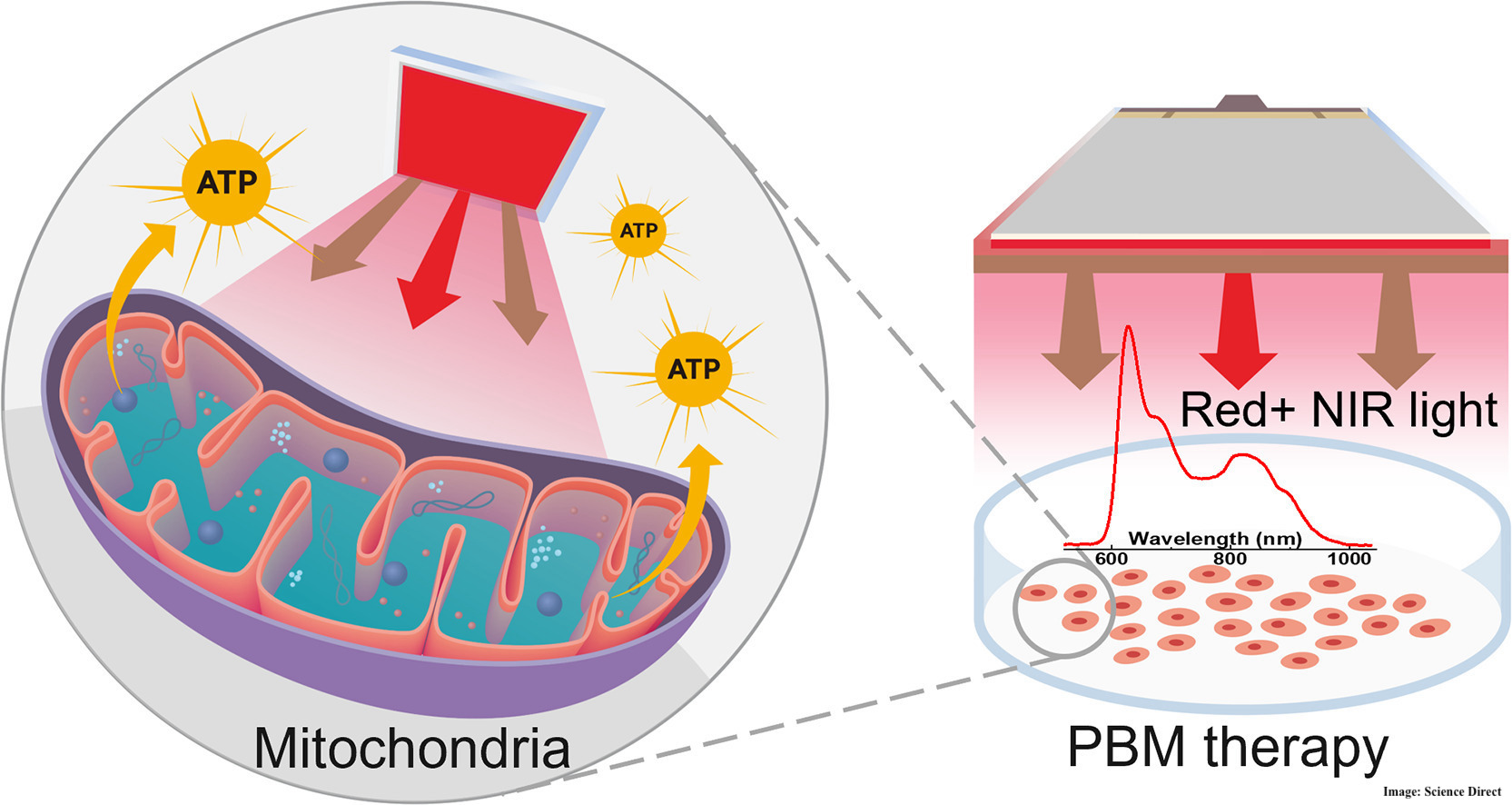
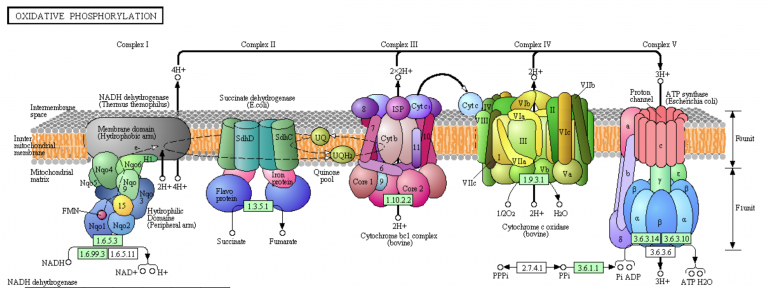
You are probably asking why the heck I have a ridiculous image like that above! PBM affects mitochondria (give me a chance here) in a positive way. Mitochondria are responsible for making energy, among many other roles. Within the mitochondria is something called the electron transport chain, or ETC. The ETC is like a conveyor belt (see image below) that uses electrons to make energy, known as adenosine triphosphate (ATP).
ATP is a big deal because cells need it…to keep you alive (please note strong sarcasm here). Keeping it simple, mitochondria are critical for life (please see the article I wrote below on mitochondria).4 How does this tie into PBM? Well, PBM stimulates activity of the ETC.1(2)
ARTICLE LINK: Mitochondria and Relationships to Health
OK. PBM STIMULATES MITOCHONDRIA. WHY SHOULD I CARE?
Yes, this image is nauseating, but please stick with me! See “complex IV” in the image above? Well, this is a part of the conveyor belt we were chatting about. Sometimes complex IV can get “gummed up.” This slows down the ability of the mitochondria to make ATP. This happens because there is a substance called nitric oxide (NO) that binds to complex IV, keeping it from helping make ATP.5
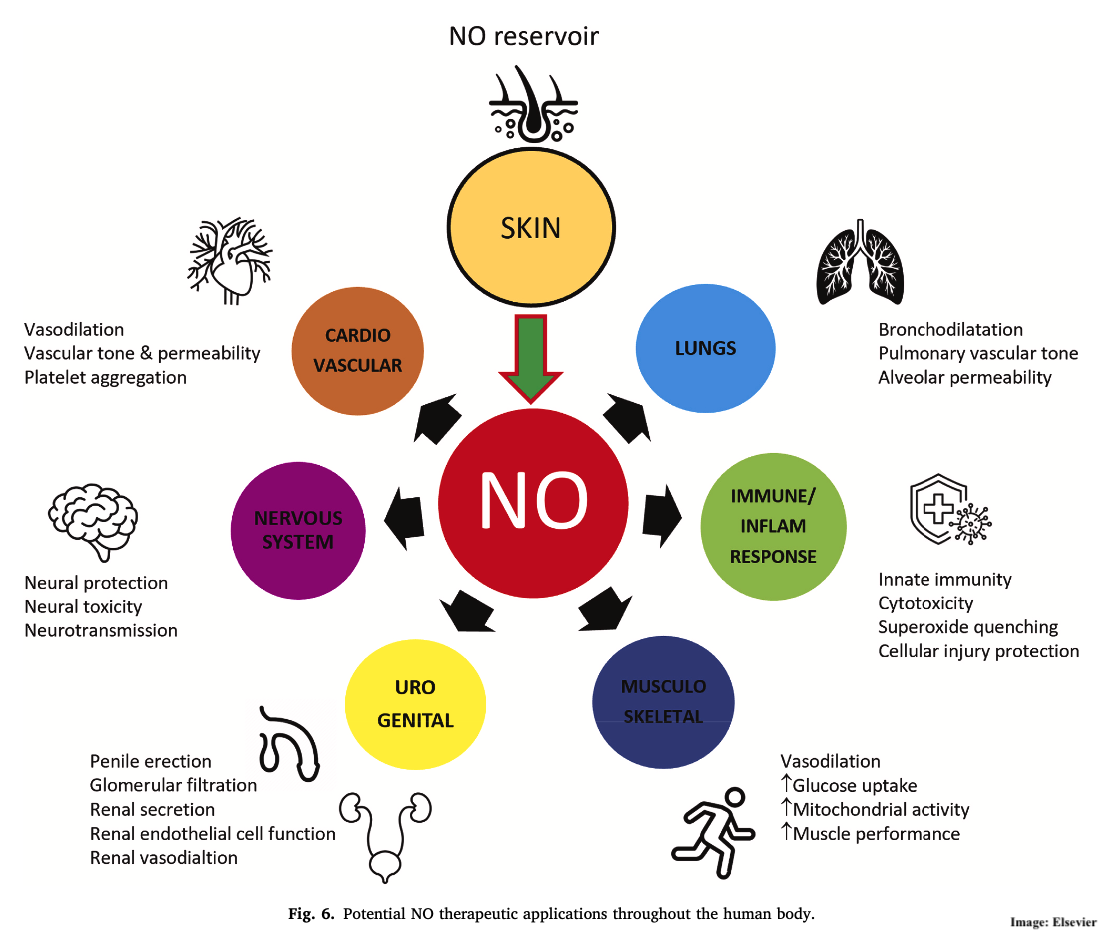
So, when you hit your cells/body with specific wavelengths of light at the right irradiance/fluence (remember the qualities of light in the previous section), NO gets released from complex IV; the ETC/conveyor belt starts working again.6 And yes, I know I placed an image just above this section showing the benefits of NO on your body.3(20) I did this as a reminder that a substance isn’t necessarily “good” or “bad” in your body; it is more about time and place (like most things right?).
PBM does other helpful things in your cells as well, to include increased activity of a protein called redox factor-1-dependent activator protein (RF1DAP) found in the cytoplasm of a cell and within mitochondria.1(2) This is helpful because RF1DAP stimulates other proteins (called transcription factors) that repair damaged DNA.7 RF1DAP also lowers oxidation/inflammation, as well as supporting cell growth and overall health.7(6)
If that was not enough, PBM also upregulates a protein called hypoxia inducible factor alpha (HIFA).1(2) HIFA is part of a larger protein called hypoxia inducible factor (HIF). HIF becomes useful in your cell health because it helps form new red blood cells (carries oxygen as you might know), develops new blood vessels (aka angiogenesis), improves glucose metabolism (a raw material in ATP production), and aids in cell survival.8
My rant is not over. PBM also activates a transcription factor (fancy term for activating genes to do things remember) known as nuclear factor kappa-B (NFKB).1(2) This matters because NFKB influences management of inflammation, cell death (apoptosis), neuroplasticity, as well as growth and spread of new neurons.1(2) As you can see, PBM influences multiple mechanisms with in your cells and mitochondria to keep your tissues healthy and working well!
YOU HAVE MY ATTENTION. WHEN SHOULD I USE PBM?
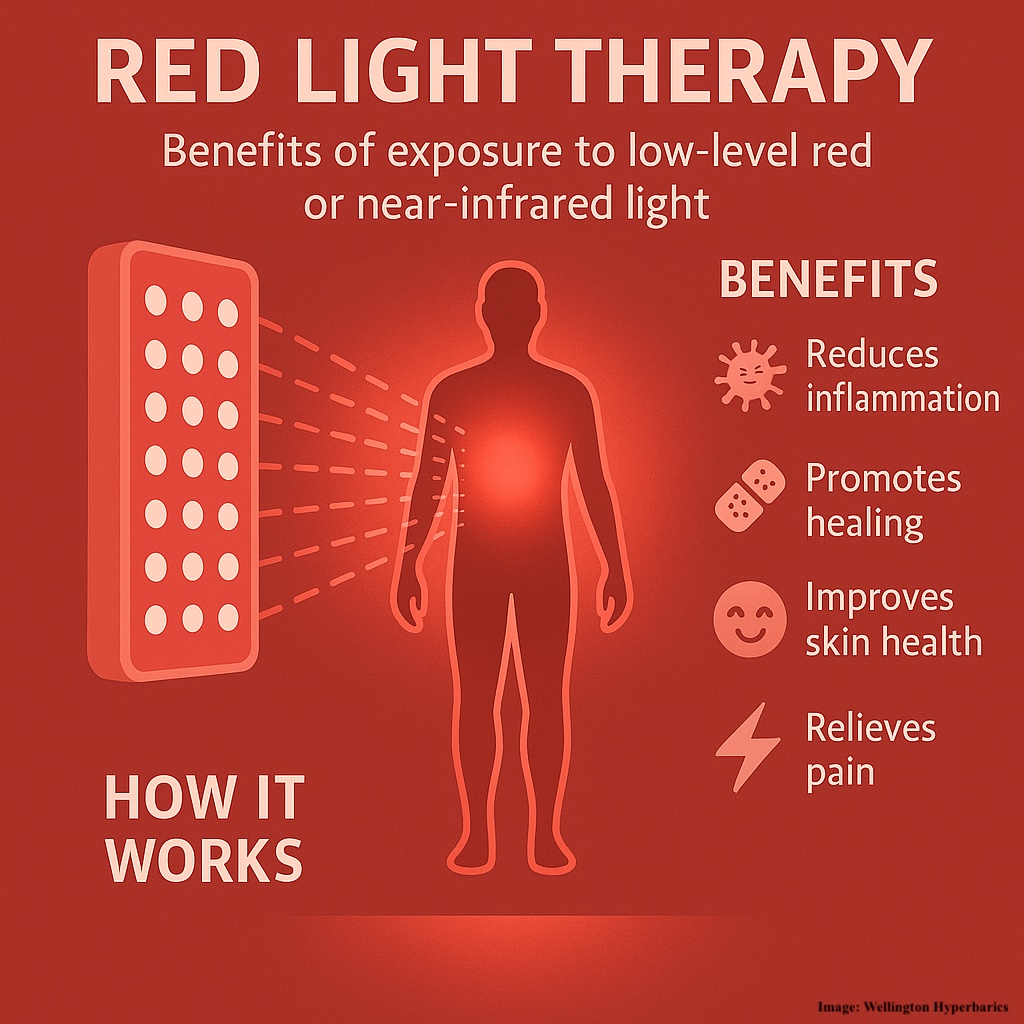
Great question! Red light therapy (or PBM) can be helpful when you have some form of tissue trauma, like a surgery, concussion, joint pain, or skin conditions (to name only a few).9 I’m sure this makes sense to you now, considering that PBM helps your cells work better (which makes you work better). We spent a chunk of time talking about benefits PBM, but we also need to get specific about the particular wavelengths, irradiance, and dose needed to support your cell health as well.
1.Wavelengths: there are several, and they tend to reach different layers of your body. If you want to stimulate your mitochondria in these layers, wavelengths in the 600-1400 nm range will achieve this goal.1(2) Getting specific, if you are interested in addressing superficial layers, like your skin, wavelengths between 600-800 nm appear to provide sufficient penetration.10 Deeper tissues, like your brain, muscles, and joints require larger wavelengths above 800 (i.e., 830-860 nm) to become stimulated.11
2. Irradiance: as mentioned in previous sections, this is the “punch” behind light, and a red light panel’s LEDs have to be above 1 W to penetrate deeper tissues, like the skull.1(9) Now, the wattage per LED is only one part of the equation for irradiance. Irradiance is the intensity of light (wattage, shown in milliwatts or mW) over a given surface area of skin (cm2). Irradiance for reaching deeper tissues, like the brain and joints, appears to be around 100 mW/cm2 up to as much as 250 mW/cm2.12,13 So check the irradiance of your red light panel and make sure it falls within these ranges.
3. Dose/Fluence: having the right wavelengths and the right “punch” behind those wavelengths are critical to stimulate your mitochondria. But, how long should you be in front of a red light panel? Henderson1(1) stated that extensive research has suggested a dose/fluence somewhere between 0.9J/cm2 to 15J/cm2 has activated all of those beneficial biological processes mentioned in previous sections. So, check your red light specs for these ranges as well! To keep it simple, 5-10 minutes of daily exposure time, up to 5 days per week, are reasonable options, especially for deeper tissues like the brain.14,15,16

CONCLUSION
There you have it. Hopefully you know a little more about the What, How, Why, and When of PBM/red light therapy! But, on a final note, I believe this type of intervention should be considered a supplement to consistent sleep quality/quantity, whole foods (minimally processed), and resistance training. Always make your you keep these fundamentals going, and add to them if you like. Best of luck in your health journey!
References
1. Henderson TA. Can infrared light really be doing what we claim it is doing? Infrared light penetration principles, practices, and limitations.Front Neurol. 2024;15:1-18. doi:10.3389/fneur.2024.1398894.
2. Herrera MA, Ribas AP, da Costa PE, Baptista MS. Red-light photons on skin cells and the mechanism of photobiomodulation. Front. Photonics 2024;5:1-12. doi: 10.3389/fphot.2024.1460722.
3. Barolet AC, Litvinov IV, Barolet D. Light-induced nitric oxide release in the skin beyond UVA and blue light: Red & near-infrared wavelengths.Nitric Oxide. 2021;117:16-25. doi:10.1016/j.niox.2021.09.003.
4. Moura JP, Oliveira PJ, Urbano AM. Mitochondria: An overview of their origin, genome, architecture, and dynamics.Biochim Biophys Acta Mol Basis Dis. 2025;1871(5):167803. doi:10.1016/j.bbadis.2025.167803.
5. Erusalimsky JD, Moncada S. Nitric oxide and mitochondrial signaling: from physiology to pathophysiology.Arterioscler Thromb Vasc Biol. 2007;27(12):2524-2531. doi:10.1161/ATVBAHA.107.151167.
6. Nairuz T, Sangwoo-Cho, Lee JH. Photobiomodulation Therapy on Brain: Pioneering an Innovative Approach to Revolutionize Cognitive Dynamics.Cells. 2024;13(11):1-21. doi:10.3390/cells13110966.
7. Koliadenko V, Wilanowski T. Additional functions of selected proteins involved in DNA repair.Free Radic Biol Med. 2020;146:1-15. doi:10.1016/j.freeradbiomed.2019.10.010.
8. Ziello JE, Jovin IS, Huang Y. Hypoxia-inducible factor (HIF)-1 regulatory pathway and its potential for therapeutic intervention in malignancy and ischemia.Yale J Biol Med. 2007;80(2):51-60.
9. Wunsch A, Matuschka K. A controlled trial to determine the efficacy of red and near-infrared light treatment in patient satisfaction, reduction of fine lines, wrinkles, skin roughness, and intradermal collagen density increase.Photomed Laser Surg. 2014;32(2):93-100. doi:10.1089/pho.2013.3616.
10. Hernández-Bule ML, Naharro-Rodríguez J, Bacci S, Fernández-Guarino M. Unlocking the power of light on the skin: A Comprehensive review on photobiomodulation.Int J Mol Sci. 2024;25(8):1-33. doi:10.3390/ijms25084483.
11. Jeffery, G., Fosbury, R., Barrett, E.et al.Longer wavelengths in sunlight pass through the human body and have a systemic impact which improves vision. Sci Rep. 2024.15:1-11. https://doi.org/10.1038/s41598-025-09785-3.
12. Zein R, Selting W, Hamblin MR. Review of light parameters and photobiomodulation efficacy: dive into complexity.J Biomed Opt. 2018;23(12):1-17. doi:10.1117/1.JBO.23.12.120901.
13. Fernandes F, Oliveira S, Monteiro F, et al. Devices used for photobiomodulation of the brain-a comprehensive and systematic review.J Neuroeng Rehabil. 2024;21(1):1-29. doi:10.1186/s12984-024-01351-8
14. Ji Q, Yan S, Ding J, Zeng X, Liu Z, Zhou, et al. Photobiomodulation improves depression symptoms: a systematic review and meta-analysis of randomized controlled trials.Front Psychiatry. 2024;14:1-13. doi:10.3389/fpsyt.2023.1267415.
15. Farazi N, Salehi-Pourmehr H, Farajdokht F, et al. Photobiomodulation combination therapy as a new insight in neurological disorders: A comprehensive systematic review. BMC Neurology.2024;24(1):101.doi:10.1186/s12883-024-03593-4.
16. Seok JW, Kim K, Kim JU, Kim JD. Effect of photobiomodulation intervention for depressive symptoms: A systematic review and meta-analysis.J Affect Disord. 2026;393:1-12. doi:10.1016/j.jad.2025.120413.
-Michael McIsaac